Column · @runoffguide074
How Seamless Gutters Help Manage Frequent Rain in Gainesville FL
Anyone who has lived through a Florida summer in Gainesville knows rain is not an occasional event. It is part of the rhythm of the season. A bright morning can turn into a hard afternoon downpour with very little warning, and during the warm season, thunderstorms and tropical moisture can keep that pattern going for weeks. In a place with high humidity, frequent storms, and recurring flooding rain concerns, the way a house sheds water matters more than many homeowners expect.
That is where seamless gutters earn their keep.
A gutter system is easy to ignore when it is working. Water disappears off the roofline, the entry stays drier, the mulch stays in place, and nobody thinks much about it. But in Gainesville, and across much of Central and North Florida, rain tests every weak spot. If gutters leak at seams, sag in sections, or clog with leaves and pine needles, those problems show up fast. You see splashing at corners, overflow near walkways, and water falling right where you do not want it.
Seamless gutters are not magic, and they are not maintenance-free. Still, they solve a very practical problem in a very practical climate. They reduce leak points, handle runoff more cleanly, and give homeowners a better shot at keeping up with Florida weather without constantly fighting the same trouble spots.
Why Gainesville homes put gutters to work harder than many people realize
Florida’s wet season pattern changes the conversation. In a drier climate, gutters may only have to handle occasional storms and modest debris. In Gainesville, the system has to deal with frequent warm-season thunderstorms, long stretches of humidity, and repeated soaking rain. Summer weather driven by sea breezes and tropical moisture can bring intense downpours, and those bursts of water move off the roof all at once.
That matters because gutter performance is really about flow. A roof collects rain across a large surface area, then sends it to the edges. If the gutters are undersized, poorly pitched, clogged, or full of seams that weaken over time, water starts escaping before it reaches the downspouts. When that happens, the house is no longer directing water away in a controlled path. It is dumping it near the foundation, around planting beds, and onto areas people use every day.
The Gainesville area also has a tree debris issue that many homeowners know well. Leaves, pine needles, small limbs, and acorns can build up quickly. Live oak debris in particular can be stubborn. Even a system that handled runoff well when it was clean can start to fail once that organic material gathers in the trough or piles up at the outlet. In a humid region, wet debris does not dry out quickly either. It packs down, traps moisture, and turns a simple gutter into a heavy, slow-draining channel.
That combination, heavy rain plus regular debris, is exactly why seamless gutters make sense here.
What “seamless” really means in day-to-day use
The term sounds technical, but the benefit is straightforward. Traditional sectional gutters are assembled from multiple pieces joined together along the run. Every connection is a possible weak point. Over time, joints can separate, sealant can wear down, and leaks can begin at the seams long before the metal itself has reached the end of its service life.
Seamless gutters reduce those interruption points by using longer continuous runs shaped to fit the home. There are still connections at corners and downspouts, because every system needs transition points somewhere, but there are far fewer joints overall. Fewer joints usually means fewer places for water to escape.
That matters most during the kind of rain Gainesville gets. A light shower can hide a minor leak. A strong summer storm will expose it in minutes. I have seen homeowners focus on the obvious problem, a splash zone by the front door, only to discover the real issue was a seam halfway down the run that had been dripping for a while and finally gave up under heavy flow. With a seamless setup, there are simply fewer opportunities for that kind of failure.
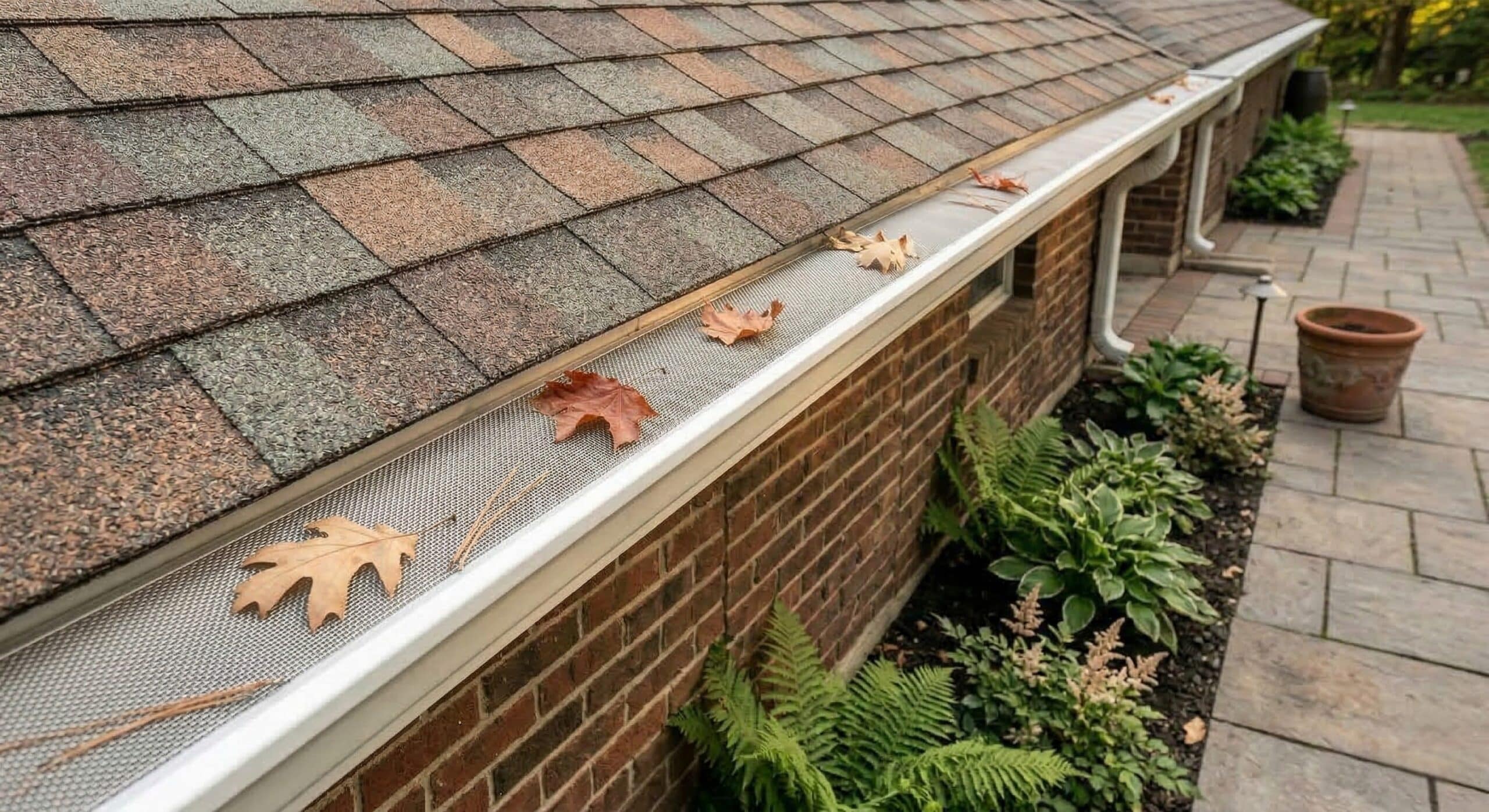
There is another advantage that often gets overlooked. Seamless gutters tend to look cleaner along the roofline. That is not just about curb appeal. A neat, consistent run often signals better fit and better alignment, both of which matter when the goal is to move water fast and keep it moving.
Less leaking means better water control where it counts
When homeowners think about gutter problems, they often picture a dramatic overflow. That certainly happens, but smaller leaks can do plenty of damage over time. Water spilling at a seam can saturate the same patch of soil again and again. It can wash out mulch, leave muddy trenches, and keep the lower wall area wet longer than it should be. Near entrances, it creates slippery surfaces and a mess that never seems to stay cleaned up.
In a humid part of Florida, reducing unnecessary moisture around the home is a smart move. You cannot control the weather, but you can control whether roof runoff is being guided where it belongs. Seamless gutters help by keeping more of that runoff inside the system until it reaches the downspout.
This is one reason homeowners looking into seamless gutters Gainesville FL often find that the value is not abstract. It shows up in the lived experience of the property. Puddles are smaller. Splashback is reduced. The sides of the house stay cleaner. You can step outside after a storm and immediately see whether the system is doing its job.
The debris problem is just as important as the rain problem
A lot of gutter discussions focus only on water volume, but in Gainesville and nearby communities, debris deserves equal attention. Leaves, acorns, pine needles, and small twigs do not need much time to create a bottleneck. Once the outlet slows, the rest of the system struggles. Water backs up, the gutter gets heavier, and overflow becomes more likely during the next strong storm.
That is why gutter maintenance Florida homeowners put off in drier months can become urgent during rainy stretches. A partly clogged system is not a small inconvenience when storms are frequent. It is the kind of issue that can turn an ordinary thunderstorm into a drainage problem.
For some homes, gutter guards are worth considering alongside seamless gutters. Not every property needs them, and not every guard style performs the same way. The right choice depends on the roofline, the tree cover, and the kind of debris that shows up most often. Mesh and micro-mesh options are commonly discussed because they are designed to block small debris while still allowing water through. Other styles exist too, including foam inserts, brush systems, and reverse-curve designs, each with trade-offs.
The key is realistic expectations. Gutter guards Gainesville FL homeowners install can reduce debris buildup, but they do not make a system maintenance-free. Fine material can still collect over time, and heavy storms can expose weak spots in installation if the system was not set properly. Guards can be a good tool, especially on tree-covered lots, but they work best as part of a broader plan that includes inspection and occasional cleaning.
Why installation quality matters as much as the product
A seamless gutter is only as good as its fit, pitch, and support. That is true everywhere, but it is especially true in a place with frequent heavy rain. If the angle is off, water can pond instead of flowing. If hangers are spaced poorly or the attachment is weak, a gutter can begin to sag under the weight of standing water and debris. If downspout placement is not thought through, runoff can still end up collecting in bad spots.
This is why choosing an experienced gutter contractor Central Florida homeowners trust is not just a matter of convenience. It affects how the system performs when the weather gets rough. Good installation starts with paying attention to the actual house rather than applying the same layout to every job. Roof valleys, long roof runs, nearby trees, and ground drainage patterns all influence what will work best.
The same logic applies across the broader region. Someone searching for seamless gutter installation Leesburg FL or gutter installation North Florida is still dealing with the core Florida challenges: recurring rain, humidity, and plant debris. The details of a property vary, but the need for sound water management does not.
A well-installed seamless system should look simple once it is done. That simplicity is deceptive. It reflects a lot of small judgments made correctly.
Signs your current gutter system may be losing the battle
Most failing gutters give warnings before they completely stop doing their job. The trick is noticing those warnings during ordinary weather rather than waiting for a severe storm to make the problem obvious.
- Water spilling over the front edge during moderate rain
- Drips or streaks appearing at joints or corners
- Visible sagging, separation, or loose sections
- Wet soil trenches or washed-out mulch below one area
- Debris packed near downspout openings after storms
One of the most common mistakes I see is assuming occasional overflow is normal for Florida. Heavy rain is normal. Constant gutter failure is not. During an especially intense storm, almost any system can be pushed hard, but if the same section overflows in routine summer thunderstorms, something is off. It may be a clog, a pitch issue, a leak, or a capacity problem. Either way, it is worth attention.
Seamless gutters and gutter guards work best together when the site calls for it
There is no universal rule that every seamless system needs guards. On some homes with lighter debris loads, routine service may be enough. On others, especially under oaks or near pines, a guard can reduce the frequency of cleanouts and help maintain better flow during the rainy season.
That does not mean the cheapest guard is the right answer. Fine pine needles can challenge some products. Acorns and leaves challenge others. If a homeowner is considering gutter guard installation Central Florida companies offer, the better question is not simply “Do guards work?” It is “Which guard style fits the debris pattern on this property, and how easy will it be to maintain?”

I have seen guarded systems stay relatively clean on one home and struggle on the house next door because the tree canopy was different. That is why honest assessment matters. A good recommendation should account for what actually falls on the roof and how often, not just promise a one-size-fits-all fix.
For many Gainesville homes, the smartest approach is a seamless gutter system paired with selective protection in the heaviest debris zones. That might be more practical than covering every inch, especially when budget and future maintenance are part of the conversation.
Cleaning still matters, even with a good system
Homeowners sometimes hear “seamless” and mentally translate it to “set it and forget it.” Florida weather does not usually allow that. Strong gutter performance depends on clear pathways, secure attachments, and functioning downspouts. Debris buildup and wear happen whether the gutter has many seams or few.
That is why services such as gutter cleaning Leesburg FL, gutter cleaning and repair Ocala FL, or gutter repair Gainesville FL remain part of the bigger picture. The naming may vary by city, but the need is regional. Properties across this part of the state deal with the same basic pressures from storms and vegetation.
Cleaning has a second benefit beyond restoring flow. It gives someone a chance to inspect the system while they are up there. A small fastener issue, a developing low spot, or a corner beginning to leak is easier and cheaper to address early than after months of wet weather.
There is also an environmental angle worth mentioning. Florida landscaping guidance often emphasizes keeping plant debris out of runoff paths, because clogged drainage and organic material in stormwater can create downstream issues. So when gutters are cleaned and debris is removed before it washes through the system, that is not only better for the house. It is also a cleaner way to manage stormwater around the property.
What a thoughtful inspection should look for
When a professional reviews a gutter system in a rain-prone Florida setting, the inspection should go beyond a quick glance at whether the trough is full of leaves. The useful checks are usually simple, but they need to be done carefully.
- Pitch and flow toward the downspouts
- Leaks at corners, outlets, and connection points
- Loose hangers or sections beginning to sag
- Debris type and buildup pattern, especially near trees
- Signs of overflow at the ground below the roof edge
These details tell a story. For example, if one section repeatedly fills with pine needles while the rest stays fairly clean, adding a guard only in that zone may make more sense than changing the entire system. If the gutter is clean but still overflows, the issue may https://rooflinejournal581.evergrovio.com/posts/gutter-installation-cost-factors-florida-homeowners-in-gainesville-should-understand be alignment or outlet restriction rather than housekeeping. If one corner leaks every storm, that points to a repair need rather than a cleaning need.
That kind of diagnosis is where experience shows. Not every problem calls for replacement, and not every old system can be saved cost-effectively. Good judgment means knowing the difference.
Repair or replace? The answer depends on what is failing
Homeowners often ask whether they really need new seamless gutters or whether a repair is enough. There is no single answer. If the system is fundamentally sound and the problem is isolated, repair can absolutely be the right call. A loose section, a localized leak, or a clogged downspout connection may not justify replacement.
On the other hand, if the gutter has repeated seam failures, widespread sagging, poor drainage across multiple runs, and chronic overflow during ordinary storms, patching can start to feel like chasing the same issue over and over. At that point, upgrading to seamless gutters Gainesville FL homeowners can rely on through the wet season often makes better long-term sense.
The same thought process applies in nearby communities, whether someone is comparing options for gutters The Villages FL, considering seamless gutter installation Leesburg FL, or planning broader gutter installation North Florida. Regional weather puts pressure on these systems. Once a sectional setup begins to fail in several places, the advantages of fewer joints and cleaner flow become hard to ignore.
The practical value homeowners notice most
People sometimes expect dramatic language around exterior home upgrades, but gutters are more honest than that. Their value is usually quiet. You notice that rainwater is not pouring off the roof edge by the garage. You stop seeing mulch migrate across the walkway after every storm. The corner near the lanai no longer stays soaked. The cleanup after heavy weather gets easier.
That practical improvement is the real selling point.
In Gainesville, where repeated thunderstorms are part of life, seamless gutters help create order in conditions that are naturally messy. They do not stop rain. They do not eliminate maintenance. They do, however, give the home a more reliable system for collecting roof runoff and sending it where it should go, with fewer leak points and better day-to-day performance.
Paired with sensible upkeep, and with gutter guards where they truly fit, they are one of the more straightforward ways to make a Florida home handle Florida weather a little better. And around here, that is not a small thing.