Column · @runoffguide074
A Homeowner's Guide to Downspout Placement in Fruitland Park
Downspout placement does not get much attention until something goes wrong. A corner of the yard stays soggy. Mulch washes out after a hard summer storm. Water spills over the gutter edge and lands right where you walk. In Fruitland Park, those problems show up fast because Florida rain has a way of turning a minor drainage flaw into a repeated headache.
Most homeowners think first about the gutter itself, the shape, the material, the color, maybe whether they want seamless gutters Ocala FL style or a more basic setup. But the downspout is what decides where all that roof water actually ends up. If the gutter catches water and the downspout dumps it in the wrong place, the system is only half doing its job.
I have seen homes with perfectly decent gutters that still had muddy beds, splashback on siding, and constant cleanup because the downspouts were placed for installation convenience instead of drainage performance. In Central Florida, where summer rains can be intense and tropical weather adds another layer of stress, placement matters more than many people realize.
Why placement matters more in Fruitland Park
Fruitland Park sits in the part of Florida where wet season storms can unload a lot of water in a short time. That changes the conversation. A downspout is not just a pipe running down the wall. It is the exit point for every gallon your roof collects during a storm.
When gutters clog with leaves, needles, and organic buildup, they lose capacity quickly. UF/IFAS guidance for Florida storm prep specifically recommends clearing debris from roofs and gutters because stormwater can overwhelm a clogged system. That tracks with what homeowners already know from experience. One heavy rain after a stretch of dry weather can send oak leaves, pine needles, twigs, and grit into the gutter channel all at once. If the downspout opening is in a poor location, or if the discharge point is wrong, the whole system struggles.
Placement also affects maintenance. A downspout tucked behind a dense shrub line might look neat from the street, but it is harder to inspect and clean. A downspout that empties into a low area beside the house might seem harmless in light rain, yet become a problem during a storm. A smart layout makes both water flow and upkeep easier.
Start with the roof, not the wall
A common mistake is treating downspouts like trim details. They are not. Their placement should follow the roof’s drainage pattern.
Every roof section sheds water to a low point. Gutters collect that runoff along the eave, then direct it toward one or more downspouts. On a simple roofline, that path is straightforward. On a more complicated house with valleys, long runs, or changes in elevation, one section can dump a surprising amount of water into a single gutter span. That is where placement starts to matter.
If a long gutter run only has one downspout at the very end, water has to travel the full length of the channel before it can exit. Under light rain, that may work fine. Under a Florida downpour, it may not. Water can back up, overshoot the gutter edge, or find the weakest point in the run. Adding or relocating a downspout shortens that travel distance and can improve performance without replacing the entire system.
This is also why discussions around gutter sizes for Florida homes are tied to downspout layout. Size and placement work together. A larger gutter may help handle volume, but even a properly sized gutter still needs downspouts in the right locations.
The best placement sends water away, not just down
A downspout does not finish its job at ground level. That is where the next drainage decision begins.
Too many homeowners focus on where the downspout looks best on the wall and not enough on where the water lands. If water empties right beside the house, it can create a permanent wet spot. If it spills onto a walkway, it turns every storm into a slipping hazard. If it discharges onto bare soil or thin mulch, it may cut channels through the bed after a few hard rains.
The goal is simple. Get roof runoff away from the house in a controlled way and avoid concentrating water in a place that creates another problem. That principle holds whether you are evaluating a newer installation or planning gutter repair Wildwood FL homeowners often need after years of heavy weather.
In practical terms, the discharge point should be chosen with the yard in mind. Look at where water naturally wants to move during rain. Watch the low spots. Notice where puddles linger. If a downspout already empties into one of those spots, that is a clue the current placement may need work.
Corners are common, but not always ideal
You will often see downspouts installed at outside corners of the house. There are good reasons for that. Corners can make the vertical drop less visually noticeable. They also make it easier to connect multiple gutter runs in a clean way.
But a corner location is not automatically the best drainage location.
Sometimes the corner is the very place you do not want extra water. It might be next to a front walk, beside a porch slab, or near a planting bed that stays damp. On some homes, a corner downspout also becomes a collection point for debris moving from two gutter directions into one outlet. If pine needles or oak leaves are common on the property, that can increase clogging risk.
A better placement may be slightly off the corner if that allows a cleaner route for water discharge and better access for cleaning. Good design balances appearance, flow, and maintenance. It is not unusual to give up a little symmetry to get a system that performs better in real weather.
Trees should influence every downspout decision
Around Fruitland Park and nearby communities, tree debris is a real part of gutter design. Pine needles, oak leaves, and acorns do not just create clutter. They change how water moves through the system.
UF/IFAS has noted the importance of keeping leaf litter and yard debris out of gutters and storm drains, both for function and because runoff can carry that organic material into waterways. They also note that pine needles and fallen leaves are better kept on site as mulch rather than allowed to wash away. That has a very practical homeowner lesson built into it. The more your downspouts discharge in a controlled way, the less likely your yard debris is to be swept where you do not want it.
This is where gutter guards for pine needles Florida homeowners consider can help, but they are not a cure-all. Guards may reduce the amount of debris entering the gutter, yet downspout placement still matters. If a downspout sits below a roof area that drops heavy debris into one concentrated section, maintenance remains important. Even protected systems need periodic checking, especially before and during storm season.
Homes shaded by pines or oaks should favor placements that make inspection easy. A downspout hidden behind fencing, vines, or thick shrubs is check it out more likely to be ignored until overflow appears.

K-style, aluminum, and the reality of Florida weather
A lot of homes in this region use aluminum gutters Central Florida contractors install every day, and many of those are K-style profiles. If you have been comparing K-style gutters Lady Lake FL companies offer, you have probably noticed that the conversation often centers on appearance and capacity. That is fair. K-style gutters are common for a reason. They fit many home styles and can carry a good amount of water when sized and sloped correctly.
Still, material and profile do not eliminate the need for smart downspout placement. Florida building requirements make clear that gutters and downspouts need to be sized and discharged in accordance with code, and that exterior systems should use approved materials and corrosion-resistant fastening. That means placement is not just a visual preference. It ties into how the system is expected to perform and hold up outdoors.
Aluminum remains popular because it resists rust and works well for many homes in humid conditions. But even a quality aluminum system can fail functionally if the downspout layout is poorly planned. You can have nice gutters and bad drainage at the same time.
Signs your current downspouts are in the wrong places
You do not need to be a contractor to spot clues. Most placement problems leave a trail.
Here are a few of the most common signs I would pay attention to:
- Water regularly spills over one gutter section during hard rain while other sections seem fine.
- One area at the base of the house stays muddy or washed out after storms.
- A walkway, patio edge, or entry area gets a steady stream of roof runoff.
- Debris repeatedly clogs the same outlet while the rest of the system stays fairly clear.
- You notice water pooling where a downspout discharges, especially during summer storms.
Any one of those can point to clogging, inadequate capacity, poor slope, or poor placement. Often it is a combination. That is why it helps to watch the system during actual rainfall rather than relying only on a dry-weather inspection.
How many downspouts should a home have?
There is no honest one-size-fits-all answer without looking at the house. Roof shape, gutter length, drainage paths, and local rainfall all matter. It would be easy to throw out a rule of thumb, but that would not be reliable advice.
What I can say is that too few downspouts is a common issue on homes where someone prioritized a clean exterior look over runoff management. Long uninterrupted gutter runs may look tidy from the curb, but they ask a lot of one outlet during a Florida storm. On the other hand, adding downspouts everywhere without thinking through where they discharge can create a patchwork of new wet spots around the house.
The sweet spot is enough outlets to move water efficiently, with each outlet directed to a location that can handle the discharge. That is where an experienced installer earns their keep.
The ground below the downspout matters as much as the outlet above
I have seen homeowners fixate on the upper half of the system and ignore the lower half. They clean the gutter, reseal a joint, maybe even look into gutter replacement Gainesville FL contractors recommend for aging systems, but the water still lands in the same trouble spot.
Take a walk around your home after a storm. Look where the splash marks are. See if mulch has been pushed aside. Check whether leaves collect where runoff exits. Those small clues tell you how the discharge point is behaving.
If the area below the downspout cannot absorb or carry water effectively, relocation may be a better answer than constant patching. A small shift in placement can change the whole drainage outcome. That is especially true on houses where one side gets more roof runoff than the others.
Storm season changes the standard
A gutter system that seems acceptable in a typical afternoon shower may reveal its flaws during tropical weather. Florida homeowners know the difference. During storm prep, cleaning gutters and downspouts is one of the practical tasks that actually affects home performance. UF/IFAS maintenance guidance also emphasizes cleaning gutters and downspouts as needed and removing organic buildup, especially in summer.
That seasonal reality should influence placement decisions. A downspout setup that is hard to access is a poor setup, even if it looks elegant. A placement that depends on a small mulch bed absorbing large roof runoff every time a storm rolls through is asking too much of that bed.
Storm ready gutters Florida homeowners trust are not just bigger gutters or stronger hangers. They are systems planned with runoff, debris, access, and discharge all working together. Sometimes the best storm upgrade is not a new gutter profile. It is a new downspout location.
When to repair, when to replace, when to redesign
Not every placement issue means you need a full new gutter system. Sometimes a targeted adjustment solves it. A downspout can be added, moved, or reworked as part of a repair. In other cases, especially if the existing gutters are aging, undersized, or poorly configured overall, a replacement makes more sense.
I usually think about it this way. If the gutters themselves are in decent shape and the main issue is overflow at one or two sections, a redesign of downspout locations may be enough. If the system has repeated leaks, sagging, poor drainage at multiple points, and obvious wear, then repair money can start to feel like throwing good money after bad.
That is where services like gutter repair Wildwood FL homeowners seek or gutter replacement Gainesville FL projects often overlap with design corrections. A contractor should not just swap materials and recreate the same poor layout. Replacement is the moment to fix placement mistakes.
Seamless gutters Ocala FL installers often promote can help reduce joints and leakage points, which is valuable, but seamless construction does not automatically solve a bad drainage plan. The route of the water still matters.
A quick walkthrough before you hire anyone
If you are thinking about changing or upgrading your system, do your own basic evaluation first. You do not need technical measurements to have a useful conversation.
Use this short check before meeting with a contractor:
- Walk the house during or right after a solid rain if it is safe to do so.
- Mark any places where water overflows, splashes heavily, or creates mud.
- Note which roof areas drop the most leaves, pine needles, or acorns.
- Identify downspouts that are hard to access for cleaning or inspection.
- Look for discharge points near entries, walkways, or persistent wet spots.
That little bit of homework can save time and make the estimate process more productive. It also helps separate cosmetic preferences from actual drainage needs.
What to ask when hiring a gutter contractor in Florida
Hiring a gutter contractor Florida homeowners can trust is partly about workmanship and partly about judgment. You want someone who understands that placement is not random. It should follow the roof, the drainage path, and the realities of local weather.
Ask how they decide where downspouts go. Ask whether they evaluate discharge at ground level, not just the gutter run above. Ask how they account for nearby trees and debris load. If you are in an area where pine needles are constant, or live oaks dump leaves and acorns seasonally, that should be part of the design conversation.
You do not need a sales pitch filled with jargon. You need a contractor who can walk the property, point to problem areas, and explain trade-offs in plain English. Maybe one placement looks better from the street, but another drains more safely. Maybe adding one extra downspout is worth it because it shortens the runoff path on a long rear section. Those are the kinds of judgment calls that matter.
You should also expect attention to fastening and durability. Florida code requirements around approved materials, secure fastening, and proper discharge are there for a reason. Outdoor metal components live in moisture, heat, and storms. Details count.
Cleaning and placement go hand in hand
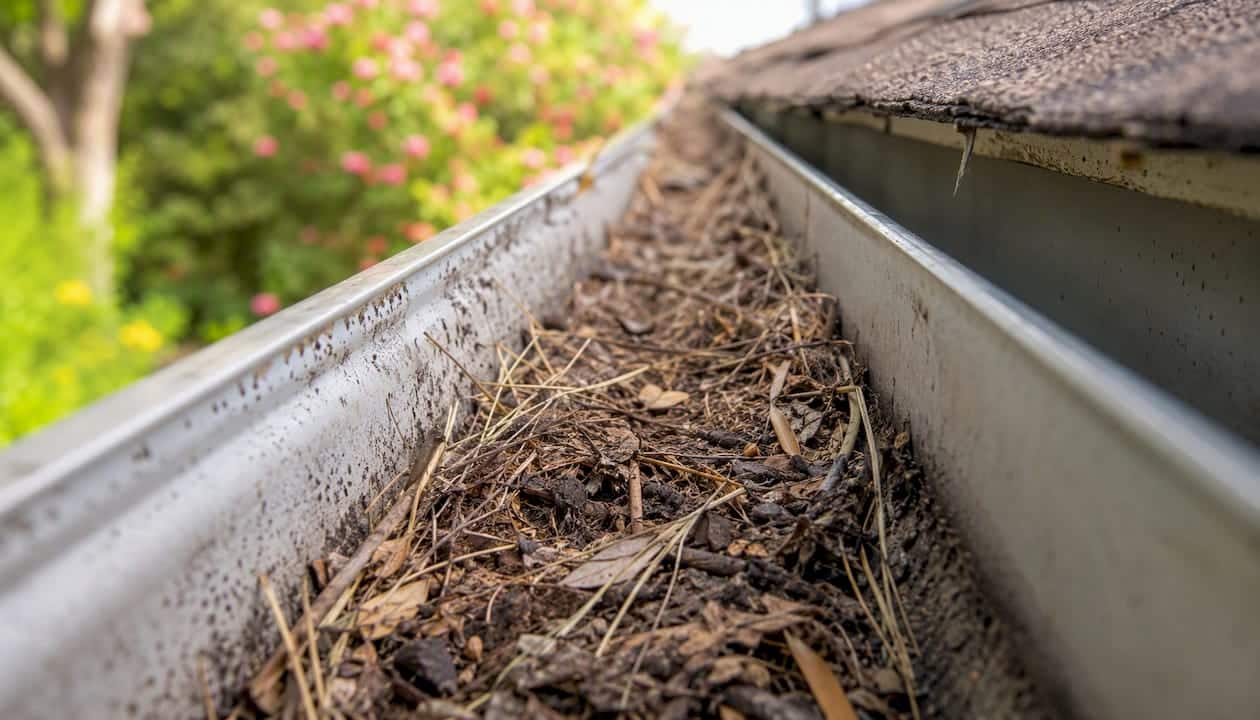
Even the best downspout layout will not stay effective if debris is allowed to build up. That is just reality in this part of the state. Gutter cleaning Fruitland Park FL homeowners keep up with is not glamorous, but it is one of the simplest ways to preserve drainage performance.
The key is to see cleaning as part of placement strategy, not a separate chore. If your current system is difficult to clean because the downspouts are awkwardly placed, hidden, or tied into debris-heavy sections, that itself is a design problem. A more maintainable layout can reduce future trouble.
This matters environmentally too. When leaves, acorns, and organic debris wash out of clogged systems and into stormwater flow, they do not just disappear. Florida guidance has pointed out that leaf litter can contribute to water quality problems, and that yard debris should be managed on site when possible. Keeping gutters clear and discharge controlled supports both home maintenance and cleaner runoff habits.
The homes that benefit most from a placement review
Not every house in Fruitland Park needs a total rethink. But some properties are especially good candidates for a downspout review.
Older homes with piecemeal repairs often end up with downspouts where it was easiest to attach them, not where they work best. Houses under mature trees face heavier debris loads and more frequent clogging. Long ranch-style rooflines can strain a sparse downspout layout. Homes where one side of the yard stays wet or erodes after storms usually have a drainage story worth investigating.
If your gutters seem to work most of the year but struggle in heavy weather, that is another sign. It often means the system is near its limit and placement is exposing the weak spot.
Getting it right without overcomplicating it
Homeowners sometimes assume drainage design has to be highly technical to be worthwhile. It does not. Good downspout placement follows a few practical truths. Water needs a clear path. Debris needs to be manageable. Discharge needs to go where it will not create a new problem. The system needs to be cleanable before storms, not just after them.
That mindset helps whether you are choosing aluminum gutters Central Florida installers recommend, comparing K-style gutters Lady Lake FL options, or deciding if your current setup only needs a modest adjustment. The smartest systems are usually not the flashiest. They are the ones that quietly move a lot of water without making a mess of the house or yard.
For a Fruitland Park homeowner, that is the standard to aim for. If your downspouts send water away cleanly, stay accessible for maintenance, and keep up when summer rain gets serious, you are on the right track. If they do not, placement is one of the first things worth revisiting.